
March to July
Since February we have been continuing to work on the glasshouse in the Cammo Walled Garden. We have uncovered a large part of the foundations and are getting closer to explaining the mysteries of its structure and usage.
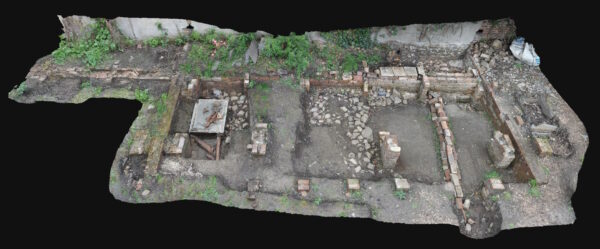
Overview of a section of the glasshouse, showing pipes, rubble, brick pillars and slate tanks.
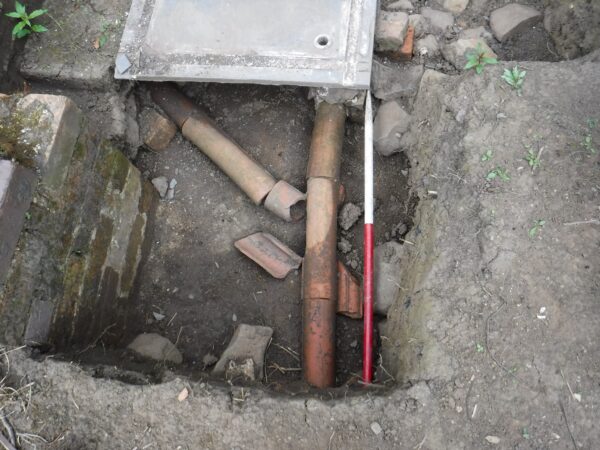
Clay drainage pipes emerging from beneath the bed of a slate water tank
Clay drainage pipes, running from the back (north) wall to the border tiles, were laid down at regular intervals at a depth of about 3 feet below ground level. These were covered throughout with a layer of stones or rubble, topped with soil enriched by large quantities of charcoal and chunks of animal bone, some certainly butchered, including horse, cow and pig. Pipes, rubble and enriched soil continue beyond what we believe is the outer, south side of the glasshouse. Two slate water tanks were built into the soil.
About 10 feet out from the heated wall, at intervals of about 8 feet, we have uncovered a line of 4 square, brick pillars, 7 courses high, built up from the natural, the space between them filled with the same rubble covered with enriched soil as in the rest of the structure. We are assuming these pillars mark the exterior, south edge of the glasshouse and must have supported a wooden or metal frame holding the glass walls.
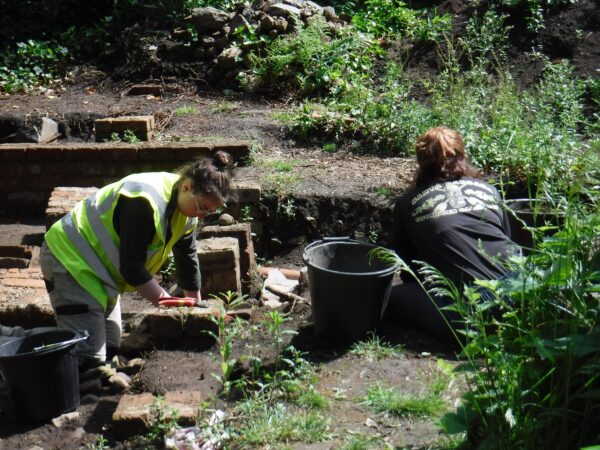
Digging down between the brick pillars
About 10 feet further out from the line of the pillars are the ceramic edging tiles first uncovered in November 2022. Border tiles have now been found with a return at both east and west ends of the excavation and we assume continue the whole length. At the east end and continuing round the corner outside the tiles, we have cleared a rough stone path about 4 feet wide with some evidence that it had a gravel and/or ash or cinder surface at one time. Inside the glasshouse was clearly divided into several sections, presumably used for different purposes, but as yet we have no evidence as to what these might have been. Discovery of a metal label for a rose variety called Ferdinand Charlotte indicates that roses were grown but whether this was under cover or in the surrounding border is uncertain. 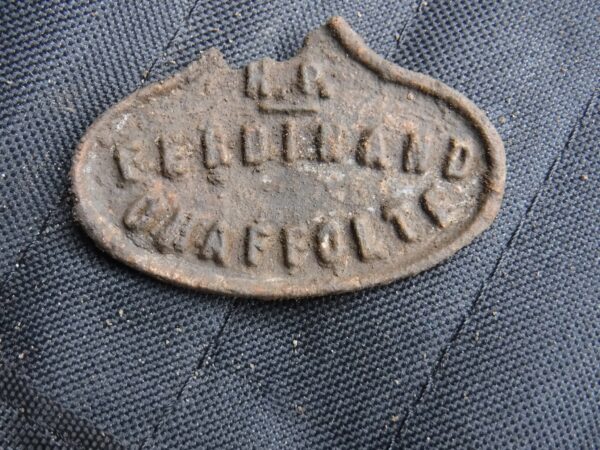
We are possibly nearing the end of what can usefully be discovered by digging this site, but still have a few questions that might be answered by further excavation:
Was there a central entrance into the glasshouse, as was common in many MacKenzie & Moncur glasshouses of this size?
How did the glasshouse heating work in the later 19th century, after the installation of the new boiler?
What was the purpose of the two strange bits of lead piping that disappear into the ground near two of the water tanks?
How was the wide border between the glasshouse and the border tiles used? Were there ever cold frames there? Was there a path down the middle?
In the 1980s what remained of the Victorian glasshouse was demolished and the wreckage still visible above ground was removed. Over the past four months we have found plenty more broken glass, remnants of all sizes of plant pots, fairly substantial amounts of corroded metal (guttering, parts of iron pipes, bits of what may have been the frame, wire for supporting plants on the heated wall, and nails), a very few shards of pottery and a couple of bits of clay pipe stem. If you’re looking for exciting small finds, Cammo Walled Garden is not the excavation for you, but if you’d like to join the fascinating work helping to interpret the site, do come along and volunteer to dig!